
How Hard Is Your Water?
Water is considered very hard above 10.5 grains per gallon (gpg). Homes across Kitchener, Waterloo, Cambridge and Guelph are often two to three times past that line.
Kitchener
17 to 36 gpgWaterloo
17 to 36 gpgCambridge
20 to 36 gpgGuelph
21 to 33 gpgVery hard water starts at 10.5 gpg
Hardness varies by neighbourhood because the region draws on many different wells. You can look up your area on the regional hardness map, or we'll test it for free when we quote your softener.
Signs You Need a Water Softener
Hard water leaves calcium and magnesium behind everywhere it goes. If you're seeing these around the house, a softener will make a noticeable difference within days.
- White crust on taps, showerheads and kettles
- Spots and film on dishes and glassware
- Stiff, dull laundry that needs extra detergent
- Soap scum that comes back right after cleaning
- Dry skin and hair that feels coated after a shower
- A water heater that rumbles or pops as it heats
Scale is expensive
Scale coats the inside of your water heater, dishwasher, washing machine and pipes. It makes heating elements work harder, clogs valves and aerators, and shortens the life of every appliance that uses water.
A properly sized softener removes the minerals before they reach your plumbing, so your water heater and appliances last longer and run more efficiently.
The Benefits of Soft Water
Most customers notice the difference within days. The savings show up over the years in fewer repairs and longer-lasting appliances.
Protect Your Home
- Stop scale in pipes, fixtures and water heaters
- Extend the life of water-using appliances
- Keep heating elements efficient
Easier Everyday Living
- Softer skin and hair after a shower
- Spot-free dishes and glassware
- Far less soap scum to scrub
Save Money
- Use much less soap and detergent
- Fewer plumbing and appliance repairs
- Delay replacing your water heater
How a Water Softener Works
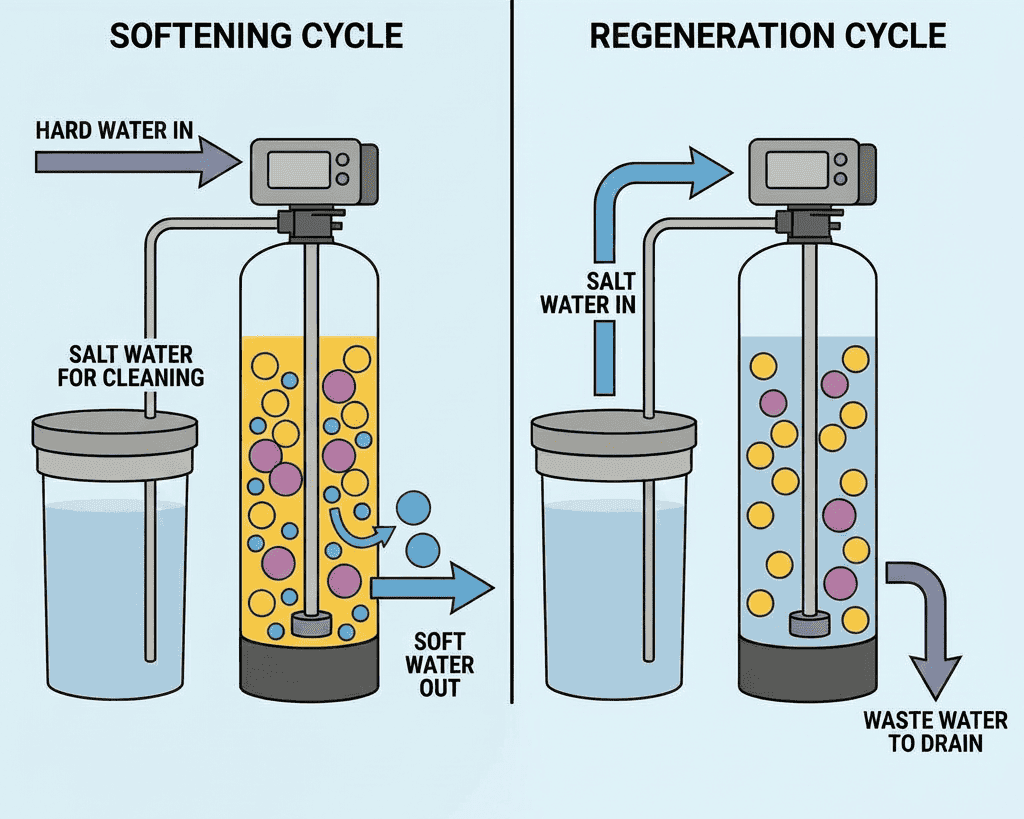
Water softeners use a process called ion exchange. As water flows through a tank of resin beads, calcium and magnesium stick to the beads and are swapped for sodium or potassium. The water that comes out is soft.
When the resin is full, the softener regenerates: it rinses the beads with brine from the salt tank, flushes the hardness minerals down the drain, and is ready to go again.
Modern demand-initiated softeners only regenerate after you've used a set amount of water, which saves both salt and water.
Choosing the Right Size Softener
An undersized softener lets hard water through. An oversized one wastes money and salt. Here's what we look at before recommending a system.
Your exact hardness
We test your water first. A home at 20 gpg and one at 36 gpg need very different capacity, and the softener has to be programmed to your number.
How much water you use
More people means more water and more hardness to remove each day. We size the resin so the system regenerates every few days, not every night.
Demand-initiated controls
Metered valves regenerate only after a set amount of water has been used, which cuts salt and water waste compared with old timer-based units.
Single or twin tank
Single-tank units suit most homes. Twin-tank systems give soft water around the clock, which helps large families and businesses.
Softeners for Homes and Businesses

Residential Water Softeners
- Single-tank and twin-tank systems
- Metered, demand-initiated controls
- Compact cabinet models for tight utility rooms
- Salt or potassium chloride options
For houses, townhomes and condos

Commercial Water Softeners
- High-flow systems for uninterrupted operation
- Parallel tanks for continuous soft water
- Protects boilers, dishwashers and process equipment
- Service plans to keep downtime low
For restaurants, apartment buildings and businesses
Complete Water Softener Services
Installation
Clean, code-compliant installs, programmed for your home's exact hardness.
Repair
Control valves, resin, brine tanks and programming for all major brands.
Maintenance
Annual service and resin cleaning to keep your softener efficient for years.
Upgrades
Replace old timer-based units with metered controls that use less salt and water.
What Our Softener Customers Say
“On March 23, who would have thought that my water softener (from 1991) and my water heater both sprung a leak on the same day? On March 25, the team at Afterglow was here, on time, removed the old appliances and installed new ones with proper clean‑up. Many thumbs up, Afterglow.”
“Very good customer service. Sharon took good care of me. Highly recommended and very professional service. Thank you, Afterglow, for taking good care of me.”
“Afterglow Ltd has performed many services for us. They service our boiler, installed a new water softener and have done some plumbing work for us. The service and the team have all been fantastic. I would highly recommend them. We have used Afterglow for 10 years – they never disappoint. Thanks to the entire team!”
Water Softener Services by Location
Hardness varies across the region, and so does the right softener. Choose your city for local details.
Water Softener FAQs
Honest answers to the questions we hear most about hard water and water softeners.
Very hard. According to the hardness maps published by the Region of Waterloo and City of Guelph, Kitchener and Waterloo measure 17 to 36 grains per gallon (291 to 616 mg/L), Cambridge 20 to 36, and Guelph 21 to 33. Anything over 10.5 grains per gallon is considered very hard, so scale shows up within months on fixtures, kettles and inside appliances.
In most of Waterloo Region, yes. Municipal water here is safe to drink, but treatment plants don't remove hardness. That's why scale builds up on taps, showerheads and kettles, and inside water heaters and dishwashers. A softener protects your plumbing and appliances and makes cleaning much easier.
For most people, yes. Ion exchange swaps hardness minerals for a small amount of sodium. If you're on a sodium-restricted diet, talk to your doctor. We can set the softener up with potassium chloride instead of salt, or add a reverse osmosis drinking water tap that removes almost all of the sodium.
Most households use one 20 kg bag of salt every 4 to 8 weeks, depending on hardness, water use and the size of the system. Modern demand-initiated softeners use much less salt than older timer-based units because they only regenerate when needed.
Salt-free conditioners can reduce scale buildup, but they don't remove hardness minerals, so they aren't true softeners. You won't get the same results on spotty dishes, soap scum or laundry. At the hardness levels in our region, a salt-based softener is usually the better choice, and we'll explain the trade-offs honestly.
A quality water softener lasts 10 to 15 years with regular maintenance. Very hard water, hot water running through the softener, and skipped service all shorten that. We set up a simple maintenance schedule when we install your system and show you how to keep the salt topped up correctly.
Yes. We repair softeners from all major brands, including control valve replacements, resin cleaning and replacement, brine tank problems and programming. If your softener is old enough that a repair doesn't make sense, we'll tell you and quote a replacement.
Ready for Soft Water?
Get a free quote with a hardness test included. Need better drinking water or have a well? See our water filtration and treatment options too.
519-747-7732