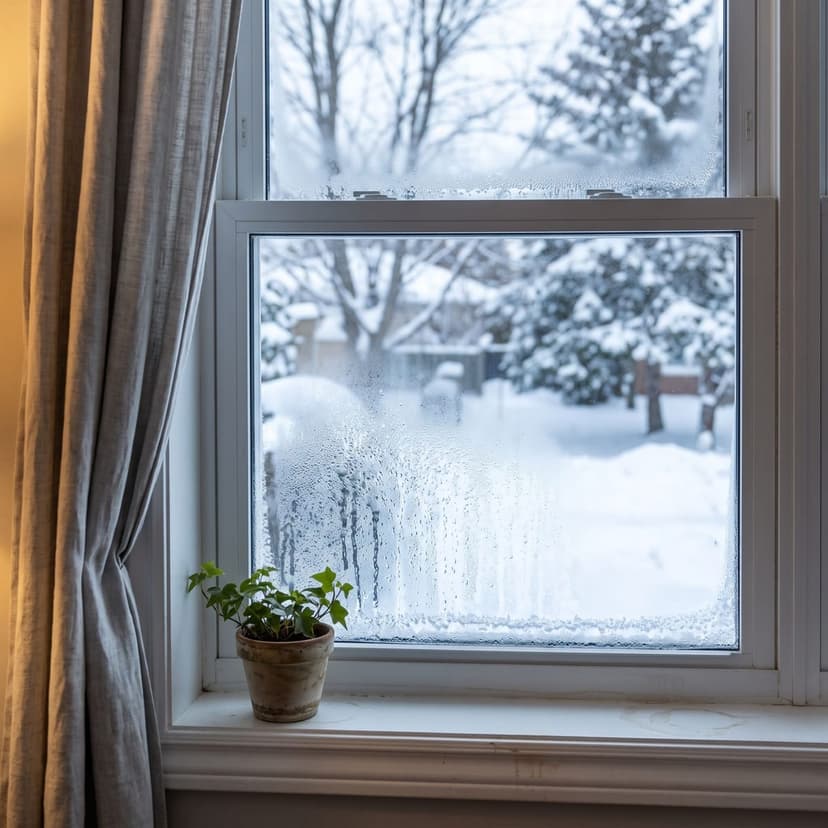
Condensation on Inside of Windows in Winter: Causes & Fixes
It's one of the first signs that winter has arrived in Waterloo Region: you open the blinds in the morning and the bottom of every window is fogged up, dripping, or even covered in a layer of frost.
A little condensation on a very cold night is normal. But if your windows are wet most mornings, water is pooling on the sills, or you're starting to see black spots on the frames, your home is telling you something. Window condensation is almost always a humidity and ventilation problem, not a window problem.
Here's what causes it, how to tell how serious it is, and how to fix it for good.
Why Do Windows Get Condensation on the Inside?
Warm air holds more moisture than cold air. When warm, humid air in your home touches a surface that's colder than its dew point, the moisture turns back into water. In winter, the coldest surface in most rooms is the window glass, especially along the bottom edge and around the frame.
So condensation forms when two things happen at once:
- There's too much moisture in the air. Showers, cooking, laundry, houseplants, aquariums and simply breathing add litres of water to indoor air every day. A family of four can produce 10 litres or more.
- The glass is cold. The colder it gets outside, the colder your windows get, and the less humidity it takes to fog them up.
That's why condensation is often worse in the first real cold snap of the season, and worst on bedroom windows, where people breathe all night behind closed doors.
Why It's Worse in Newer (and Renovated) Homes
It surprises a lot of homeowners: condensation often gets worse after new windows, new insulation or air sealing.
Older homes are leaky. Cold, dry outdoor air seeps in through gaps all winter and pushes humid air out. When you tighten a house up, that accidental ventilation stops, and the moisture you create every day has nowhere to go. The house saves energy, but the humidity builds up.
This is exactly why most new homes in Ontario are built with a heat recovery ventilator (HRV): a tight house needs a planned way to bring in fresh air and send moist air out.
Is Window Condensation Actually a Problem?
A light fog that clears by mid-morning isn't something to worry about. These are the signs it's time to act:
- Water runs down the glass and pools on the sill
- Frost or ice builds up on the inside of the glass
- Condensation lasts most of the day, not just the early morning
- You see black or grey spots on frames, sills, caulking or nearby drywall
- Paint is peeling or wood trim is swelling or rotting below the window
- The house has a musty smell, or the condensation is on many windows, not just one
Left alone, that moisture leads to mould, rotted window frames, stained drywall and damaged trim. And if your windows are wet, other cold spots you can't see, like the insides of exterior walls, closets and attic hatches, may be getting wet too.
Step 1: Check Your Indoor Humidity
Before you fix anything, measure. A digital hygrometer costs about $15 at most hardware stores and tells you your home's relative humidity (RH).
Health Canada recommends keeping indoor humidity between 30% and 55%. In winter, the colder it gets outside, the lower you'll want to be within that range:
- Above 0°C outside: up to about 45% RH
- 0°C to -10°C: about 35 to 40% RH
- -10°C to -20°C: about 30 to 35% RH
- Colder than -20°C: around 30% RH
If you're above those numbers and your windows are wet, you've found the cause. If you're below 30% and still getting heavy condensation, the problem may be the windows themselves. More on that below.
Pro tip: Don't push humidity too low to chase dry windows. Below 30%, you'll trade condensation for static shocks, dry skin and cracked hardwood. Read our post on why winter air feels so dry for the other side of the balance.
Quick Fixes You Can Do Today
These won't solve a serious moisture problem on their own, but they make a real difference:
- Run your bathroom fan during every shower and for 20 minutes after. If it doesn't hold up a square of toilet paper, it's not moving enough air.
- Use the range hood when you cook, especially when boiling water, and make sure it vents outside.
- Open blinds and curtains during the day. Heavy window coverings trap cold air against the glass and make it colder.
- Remove interior window screens for the winter. They slow airflow across the glass.
- Keep heat registers open and clear below windows, so warm air can wash over the glass.
- Turn down your humidifier if you have one. A furnace humidifier set too high is one of the most common causes we see.
- Don't dry laundry indoors, and check that your dryer vents to the outside.
- Run your ceiling fans on low (clockwise in winter) to keep air moving.
The Long-Term Fix: Proper Ventilation With an HRV
If you're still fighting wet windows after the quick fixes, your home isn't getting enough fresh air. The most effective long-term solution is a heat recovery ventilator, often called an air exchanger.
An HRV runs quietly alongside your furnace. It pulls stale, humid air out of your kitchen and bathrooms and replaces it with fresh outdoor air. Because cold winter air holds very little moisture, every cubic foot it brings in dries your home out a little. And because the incoming and outgoing air pass each other inside the HRV's core, it recovers up to 84% of the heat, so you get the fresh air without the heating bill.
HRV or ERV? For homes with window condensation in winter, an HRV is usually the better choice. An ERV (energy recovery ventilator) is designed to keep moisture in the house, which is great for very dry homes but won't dry out wet windows.
Already have an HRV? Then it's worth checking that:
- It's actually running. Many get switched off, or set to the lowest speed, and forgotten.
- The filters and core are clean. Clogged filters choke off airflow.
- It's balanced, so it's moving as much air in as it moves out.
- Your dehumidistat control is set correctly for the season.
A quick service visit often turns an HRV from "useless" to "problem solved."
When It's the Windows, Not the Air
Sometimes the humidity is fine and one or two windows still sweat. Look for:
- Condensation between the panes. This means the window's seal has failed. Ventilation won't fix it; the glass unit needs to be replaced.
- Old single-pane or aluminum-frame windows, which get much colder than modern double- or triple-pane units with low-E coatings and insulated spacers.
- Drafts around the frame, which chill the glass and edges.
If only one window has a problem, it's probably the window. If most of your windows are wet, it's the air.
Get Your Home's Humidity Back in Balance
Window condensation is your home's early warning system. Fixing the humidity now protects your windows, walls and family from mould, and makes your home more comfortable all winter.
Our team has been helping homeowners in Kitchener, Waterloo, Cambridge and Guelph breathe easier since 1991. We can check your humidity, service your existing HRV, or recommend the right HRV or ERV for your home. Learn more about our indoor air quality services.
📞 519-747-7732 Get a Free Quote
Afterglow. Water, warmth, well-being.